
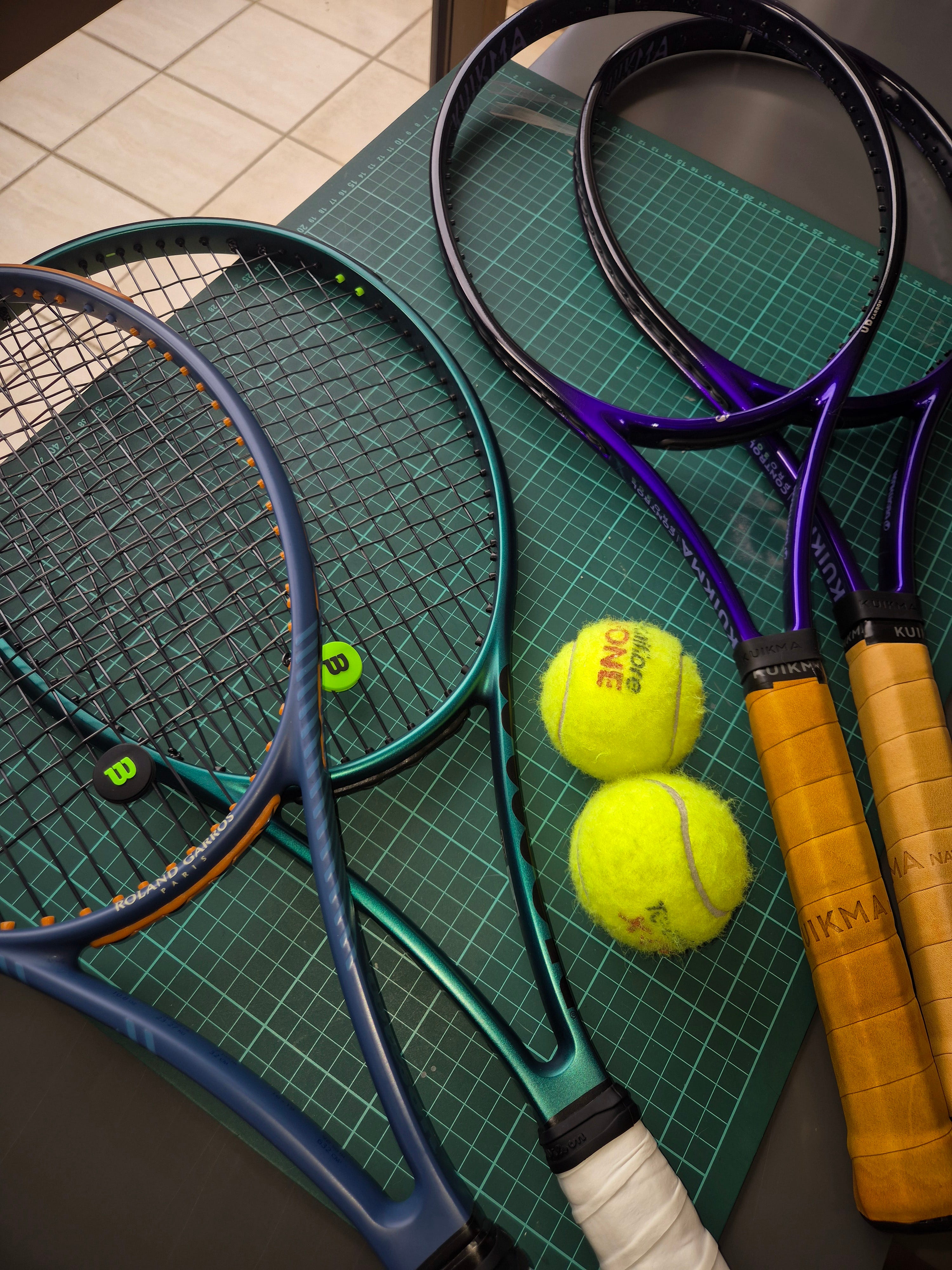
I like new racquets. New things to try, new things to talk about, another reason to get on court. I don’t think I need to apologise for that.
But I also hate losing. And when those two interests meet, you can find a lot of reasons to buy things.
More spin. A heavier ball. A bit more help on the serve. I’d change racquets every few months, then go looking for the perfect strings for each one.
Could I feel the differences? Absolutely. That was part of what kept me interested.
The awkward bit came when I tried to work out what was happening in my actual game. If a shot felt wrong, was it my timing? The strings? Another racquet I was still getting used to?
I kept changing things while trying to understand them. Then wondering why I couldn’t settle into a groove.
The differences were real. The question was what I could do with them.
A string setup might feel promising. But what did that mean when I needed to put a return in play, or trust a shot during a match? I wanted to know what I could reliably do on court. Instead, I kept giving myself another set of variables to figure out.
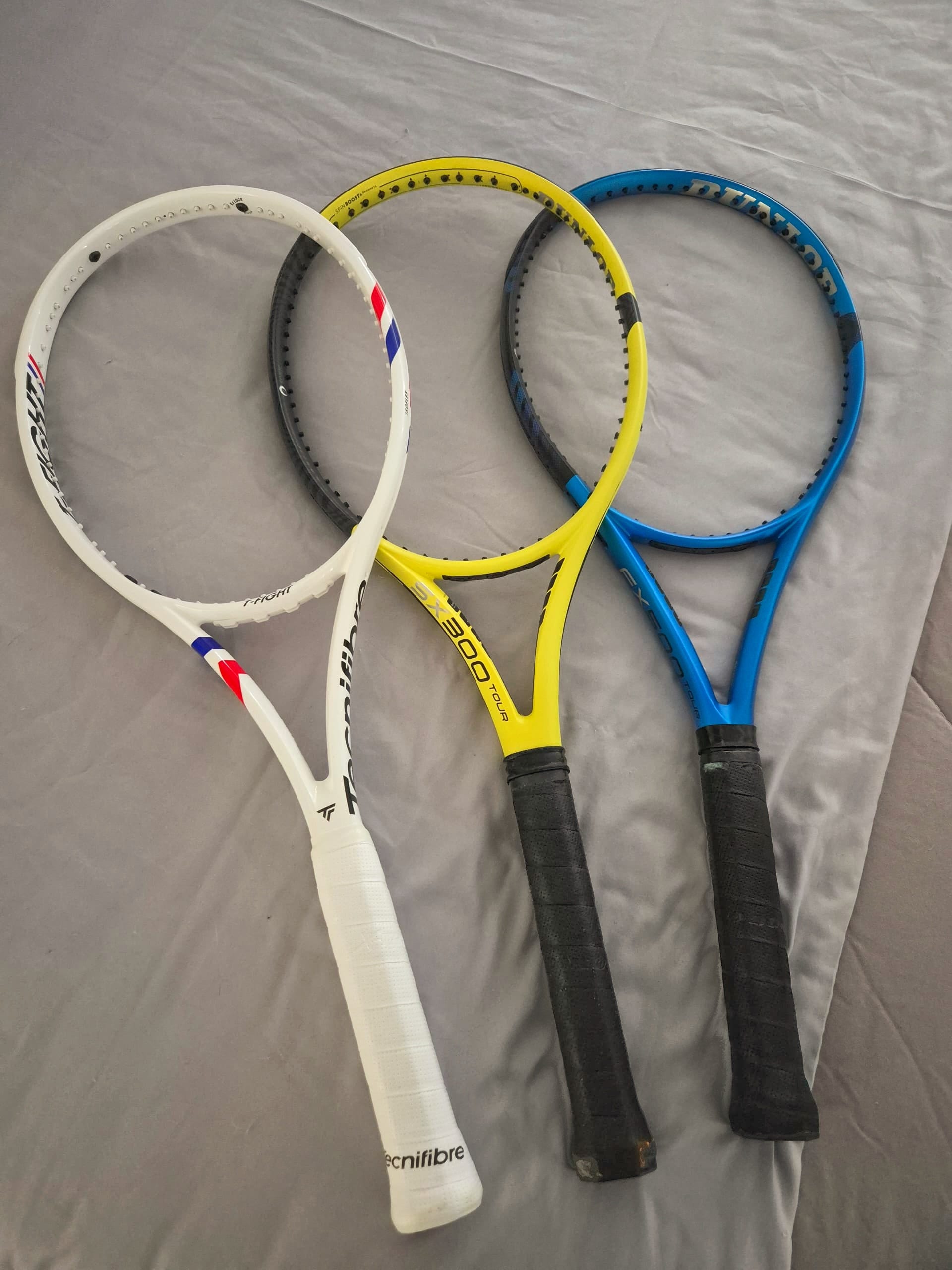
And I wasn’t waiting very long before changing something again.
Looking back, the cost wasn’t only what I paid for racquets and strings. It was how much attention went into judging them. I spent hours reading and watching reviews, then time on court trying to decide whether I was getting what I’d hoped for.
That attention had to come from somewhere. Sometimes it came from paying attention to how I was actually playing.
So was the whole exercise a waste?
I don’t think that’s quite right either.
I did find preferences. I eventually settled on a shaped-and-round hybrid and a tension range I liked. Trying things helped me get there. I still enjoy a new experience, and being excited to pick up a racquet is a real benefit.
But finding something I liked wasn’t the same as learning what I could do with it.
For me, the repeated changes made improvement harder. I’d be trying to find consistency, then change the thing I was trying to become consistent with. I wanted more confidence in my shots, but struggled to develop a predictable feel for them.
That’s an awkward outcome for something I’d bought partly to help me win.
What gave me clearer things to work on was coaching and focused practice.
With my coach, the work could follow what wasn’t working in my game: returns, depth, serve plus one, point play. With a regular hitting partner, we found that drills could make our time useful even when a competitive set was a mismatch.
There was a problem from a match. There was something to practise. Then there was another chance to see how it held up.
That made more sense to me than another round of trying to decide whether a setup felt perfect.
I still want gear that suits me. I just want a clearer reason for changing it.
These are the questions I’d take shopping now:
What problem must this solve?
“Better” is a big word. More help on a particular shot? A different feel I prefer? Or simply the pleasure of trying something new? Those are different reasons. I want to be honest about which one I’m buying for.
What must it not mess up?
If there’s something I already
trust, what am I risking while chasing the improvement? My timing, a familiar response, confidence in a shot? What would I want to keep?
What result will I look for?
Feeling a difference is the easy part for me. I want to know what I’d actually use that difference to do. On court. Under pressure. In a match.
I don’t expect those questions to cure my interest in new racquets. I’m not sure I want them to.
But they might give my current setup a fairer chance and help me understand the next one before I start shopping again.
Main banyak, Belanja bijak.